Coping with Excessive Stress?

AgLegacy_IMAGE

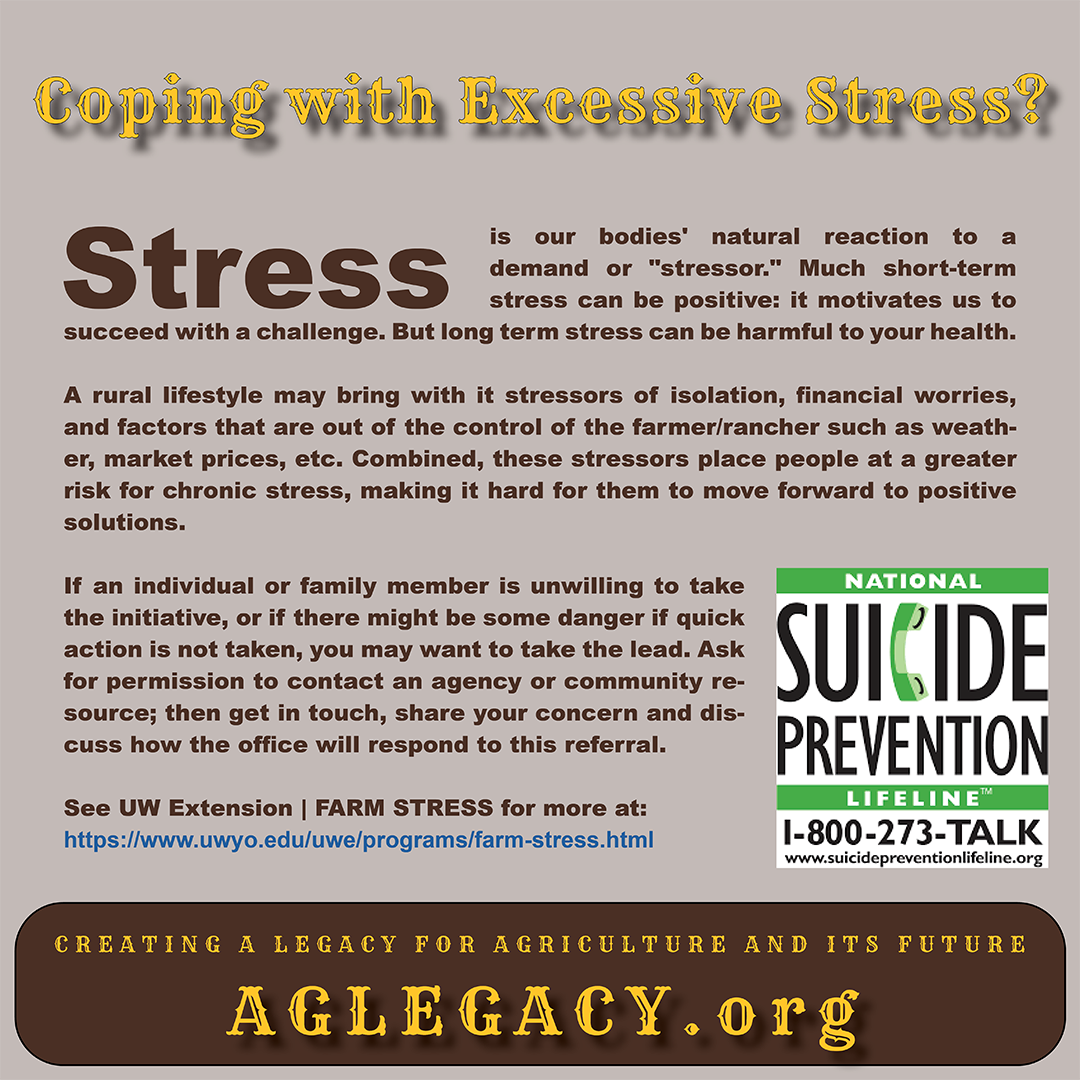
STRESS is our bodies’ natural reaction to a demand or “stressor.” Much short-term stress can be positive: it motivates us to succeed with a challenge. But long term stress can be harmful to your health. A rural lifestyle may bring with it stressors of isolation, financial worries, and factors that are out of the control of the farmer/rancher such as weather, market prices, etc. Combined, these stressors place people at a greater risk for chronic stress, making it hard for them to move forward to positive solutions.
   If an individual or family member is unwilling to take the initiative, or if there might be some danger if quick action is not taken, you may want to take the lead. Ask for permission to contact an agency or community resource; then get in touch, share your concern and discuss how the office will respond to this referral.

See UW Extension | FARM STRESS for more at:
https://www.uwyo.edu/uwe/programs/farm-stress.html

#AGLEGACY.org #FarmSuccession #EstatePlanning
Does Disrespect Have A Place in Your Ag legacy?

2020_12_AgLegacyNewsletter_IMAGE

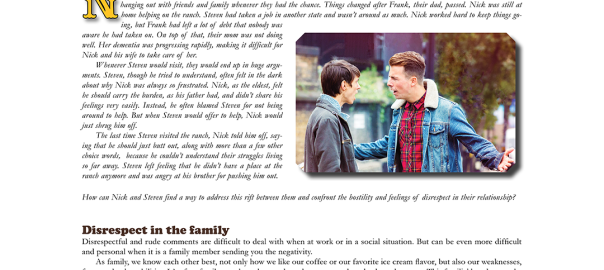
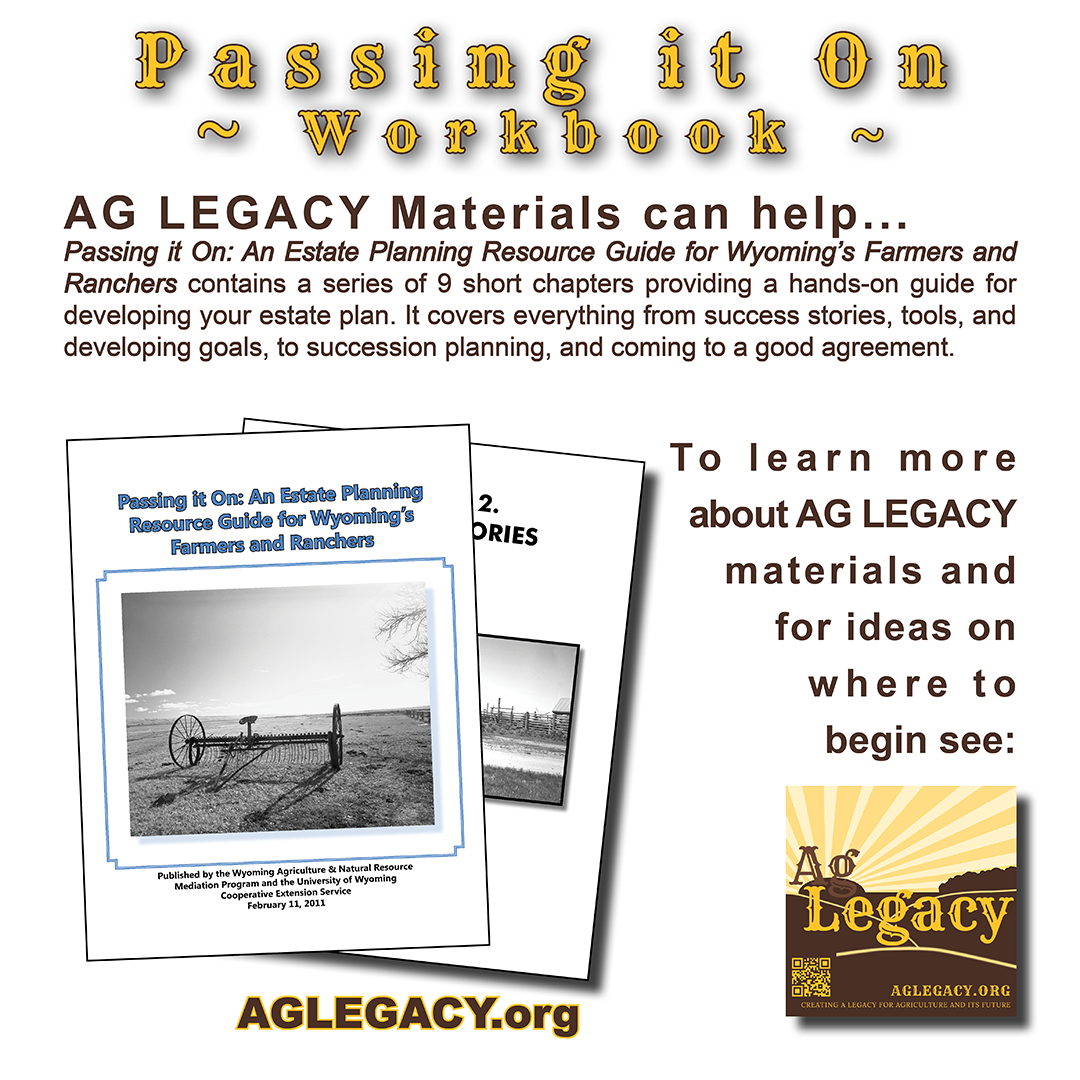
DISRESPECTFUL and rude comments are difficult to deal with when at work or in a social situation. But can be even more difficult and personal when it is a family member sending you the negativity. As family, we know each other best, not only how we like our coffee or our favorite ice cream flavor, but also our weaknesses, fears, and vulnerabilities. It’s often family members that can love the strongest, but also hurt the worst. This familial bond can make it more personal and the option of walking away may not be possible . . .

…to read more click here

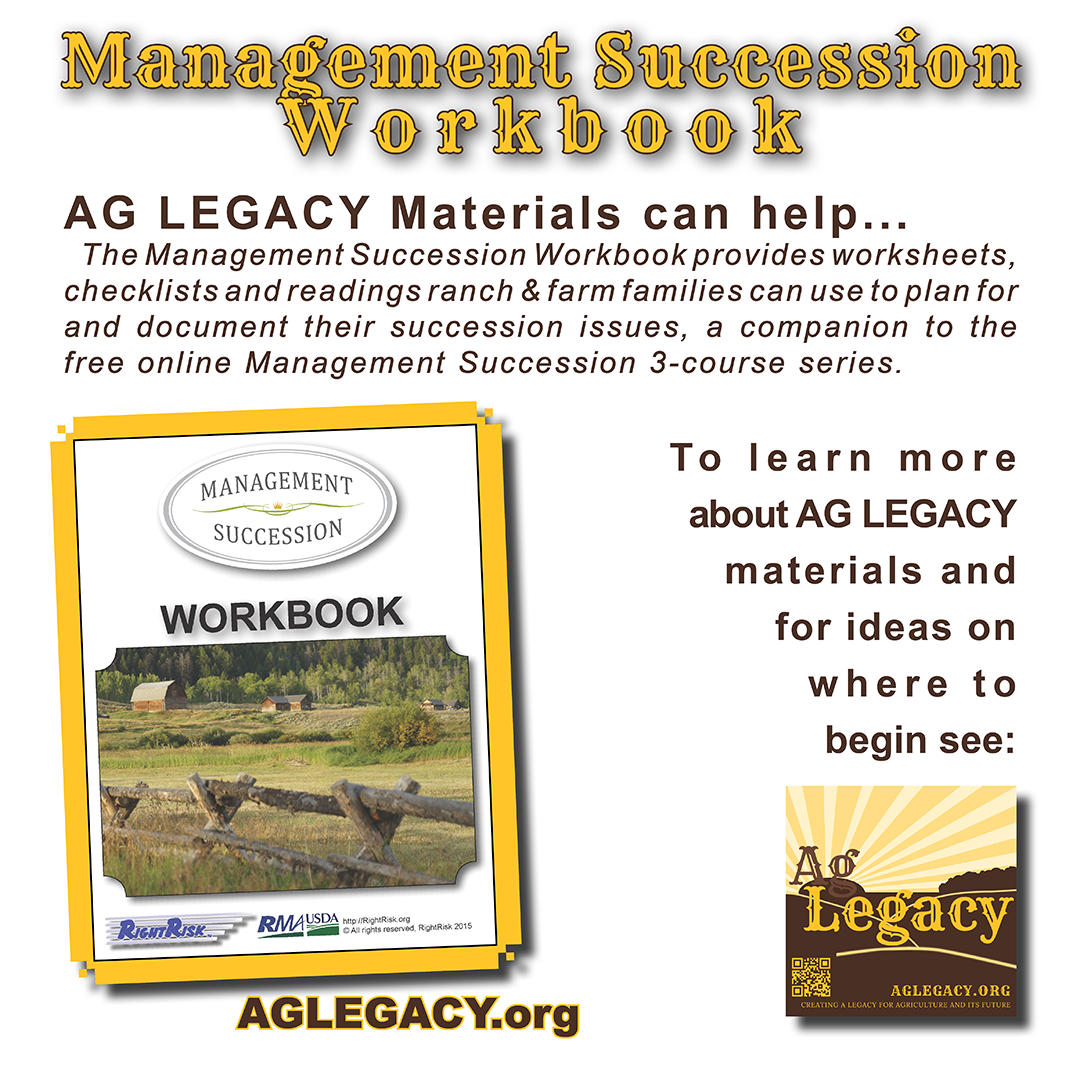
Passing it On Workbook

AG LEGACY image
#AGLEGACY.org #FarmSuccession #EstatePlanning
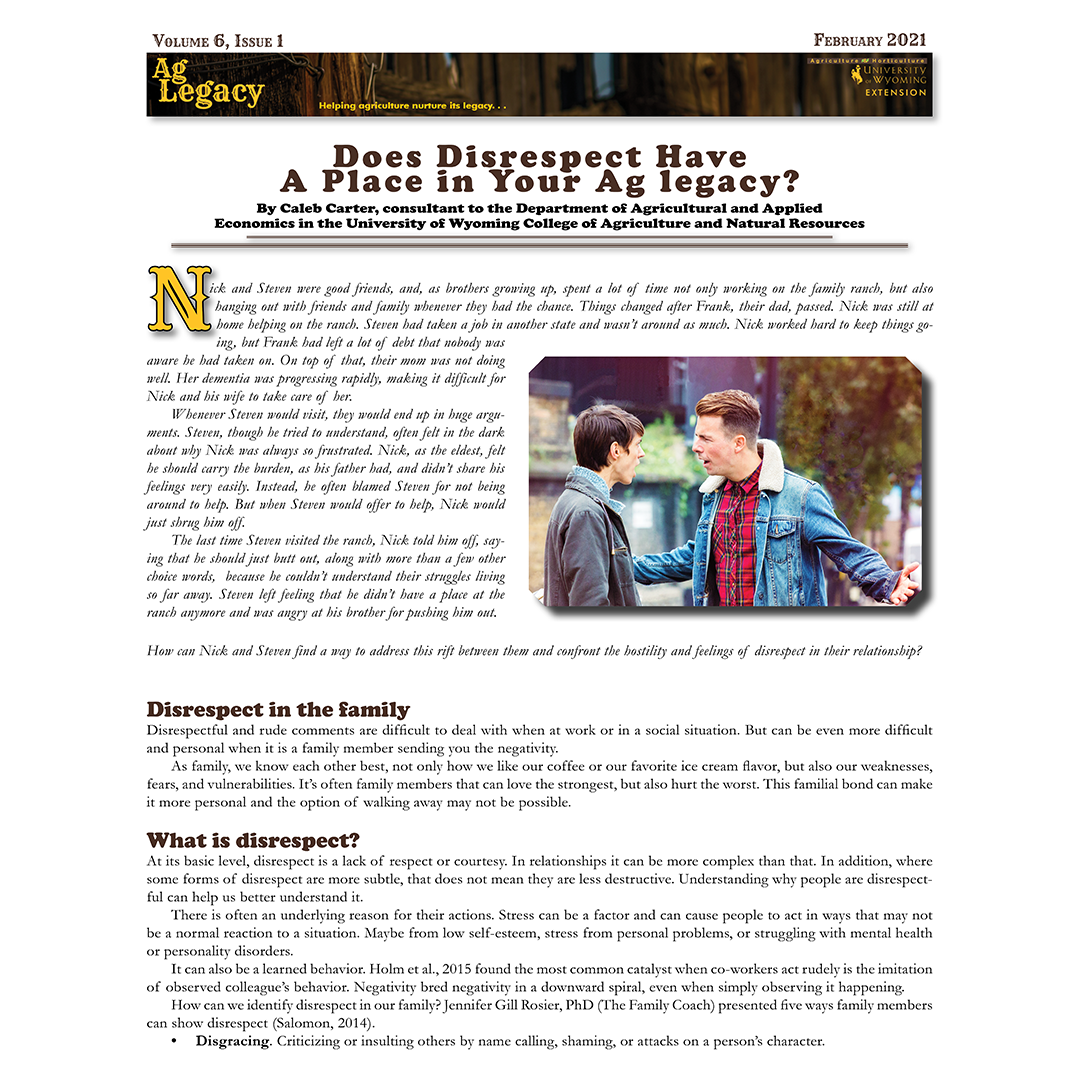
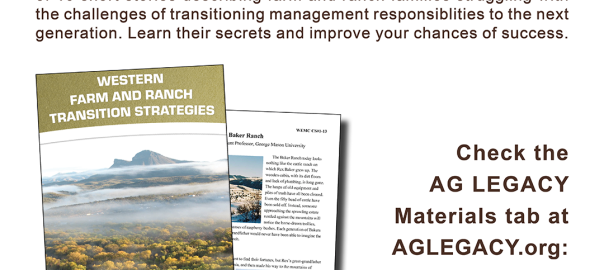
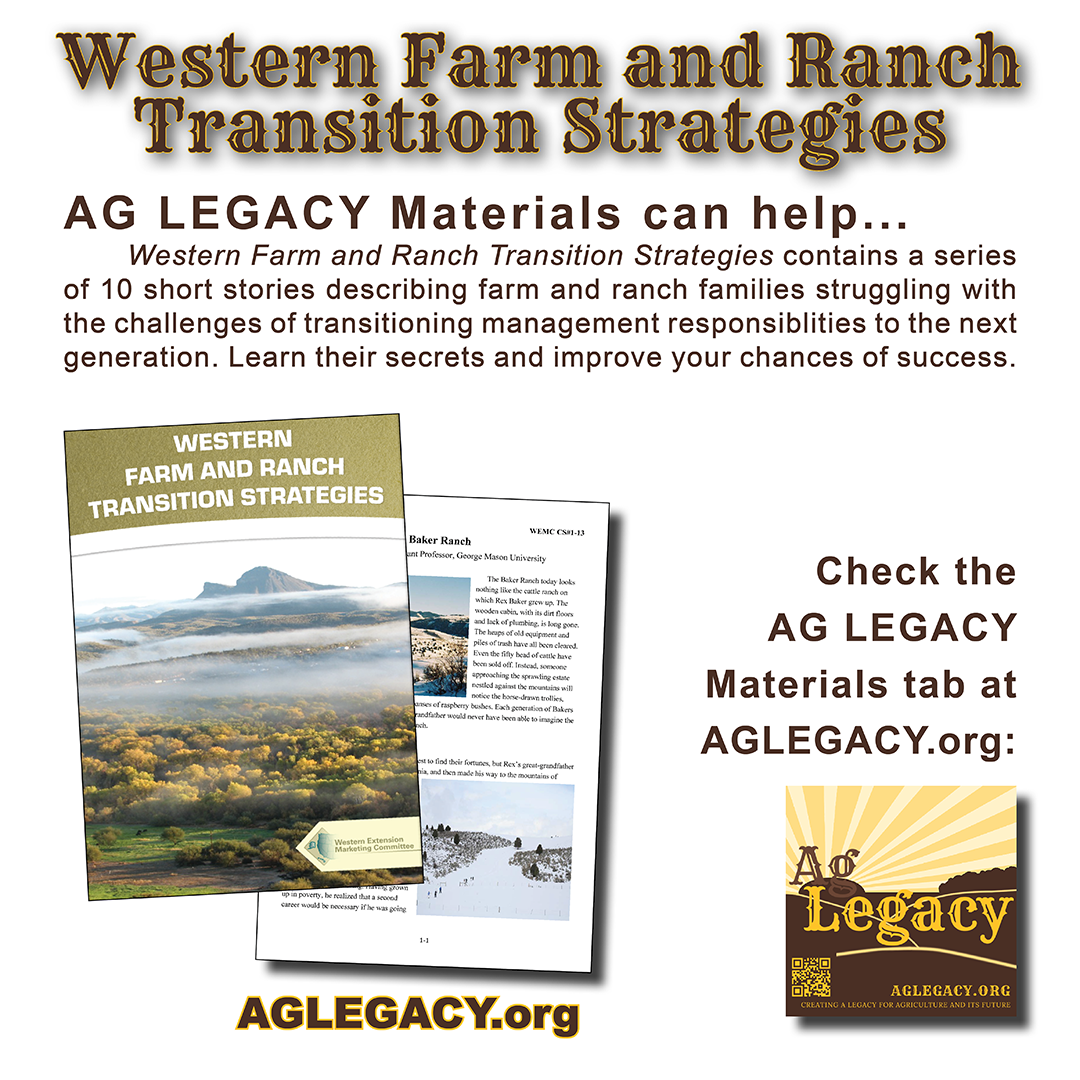
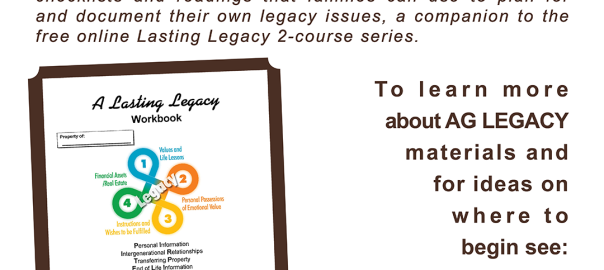
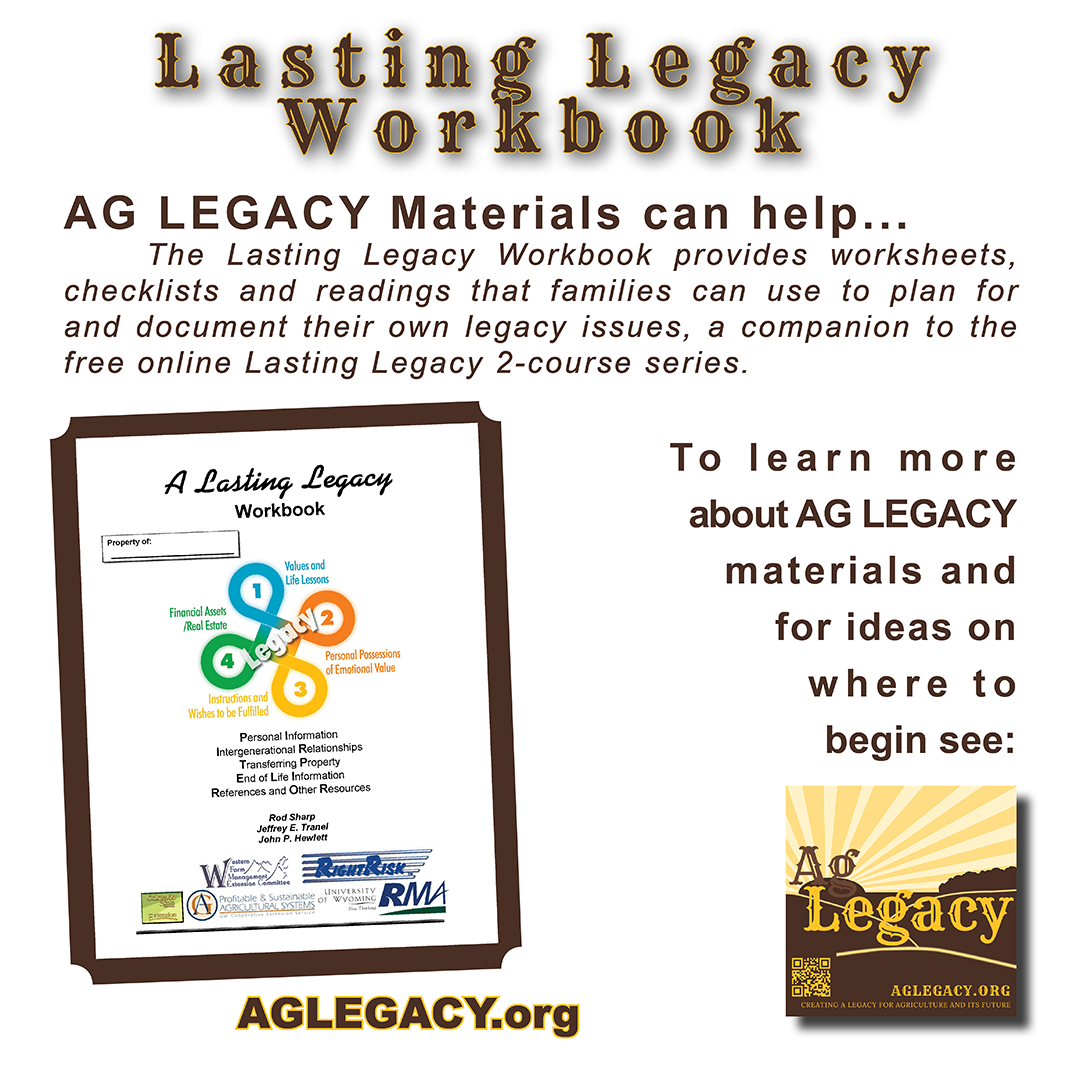
Passing it On: An Estate Planning Resource Guide for Wyoming’s Farmers and Ranchers contains a series of 9 short chapters providing a hands-on guide for developing your estate plan. It covers everything from success stories, tools, and developing goals, to succession planning, and coming to a good agreement.

To learn more about AG LEGACY materials and for ideas on where to begin see: AGLEGACY.org

AG LEGACY

2021_02_02_AgLegacy003_FCBK_image

#AGLEGACY.org #FarmSuccession #EstatePlanning
Helping agriculture nurture its legacy . . .
   A legacy is the summation of a lifetime of achievement and the context in which that lifetime will be remembered. A legacy is not just money but a reputation, what was accomplished, and the difference a person makes in the world as they pass through.

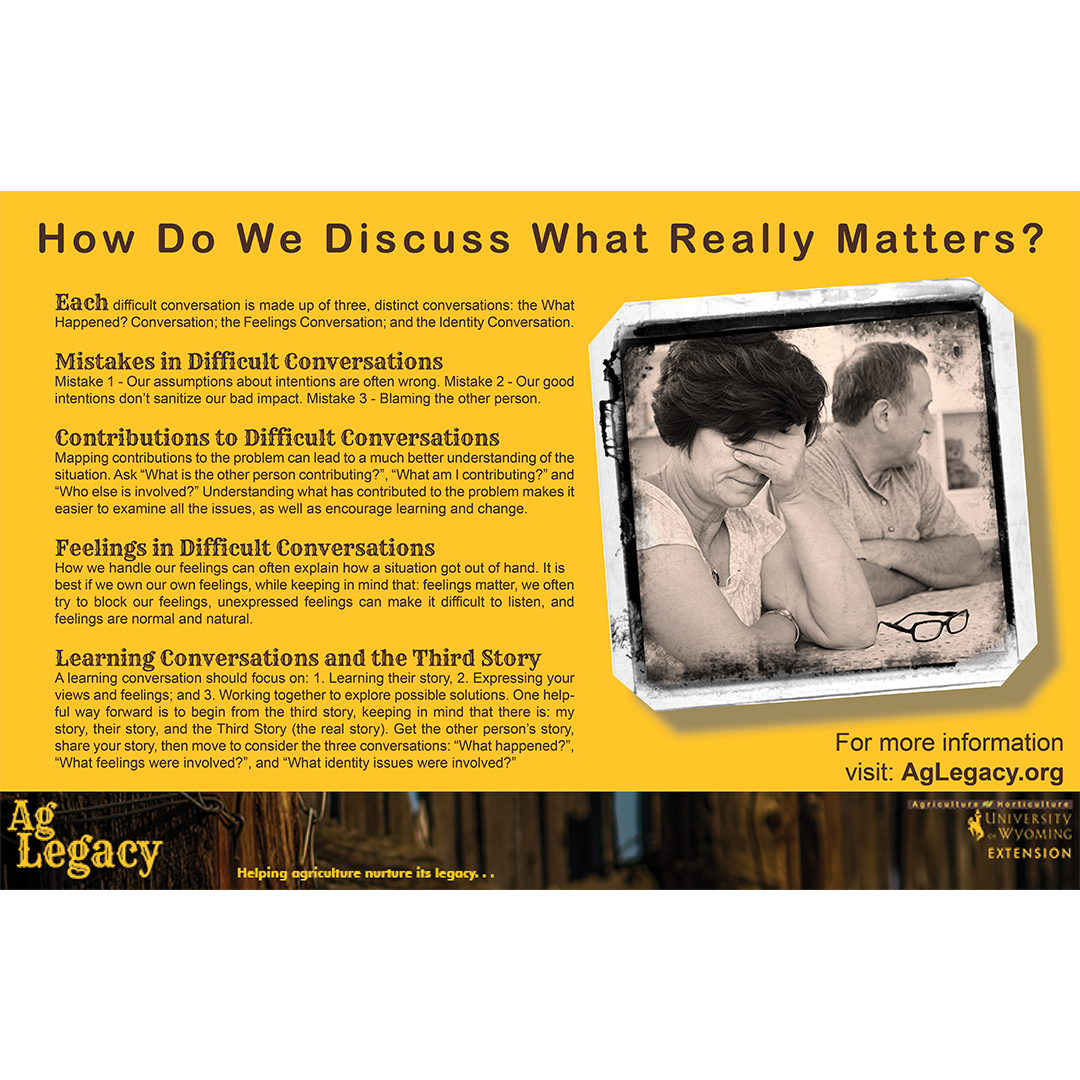
How Do We Discuss What Really Matters?

2021_01_26_ALPost_FCBK_IMAGE
#AGLEGACY.org #FarmSuccession #EstatePlanning
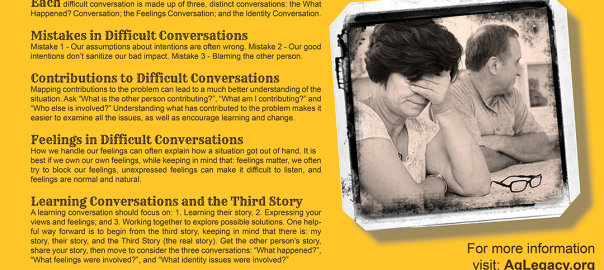
Each difficult conversation is made up of three, distinct conversations: the What Happened? Conversation; the Feelings Conversation; and the Identity Conversation.

Mistakes in Difficult Conversations
Mistake 1 – Our assumptions about intentions are often wrong. Mistake 2 – Our good intentions don’t sanitize our bad impact. Mistake 3 – Blaming the other person.

Contributions to Difficult Conversations
Mapping contributions to the problem can lead to a much better understanding of the situation. Ask “What is the other person contributing?”, “What am I contributing?” and “Who else is involved?” Understanding what has contributed to the problem makes it easier to examine all the issues, as well as encourage learning and change.

Feelings in Difficult Conversations
How we handle our feelings can often explain how a situation got out of hand. It is
best if we own our own feelings, while keeping in mind that: feelings matter, we often try to block our feelings, unexpressed feelings can make it difficult to listen, and feelings are normal and natural.

Learning Conversations and the Third Story
A learning conversation should focus on: 1. Learning their story, 2. Expressing your views and feelings; and 3. Working together to explore possible solutions. One helpful way forward is to begin from the third story, keeping in mind that there is: my story, their story, and the Third Story (the real story). Get the other person’s story, share your story, then move to consider the three conversations: “What happened?”, “What feelings were involved?”, and “What identity issues were involved?”

TO LEARN MORE about difficult conversations and how to discuss what really matters and for ideas on where to begin see: AGLEGACY.org > Modules

Difficult Conversations: What Really Matters?

2021_01_12_ALPost_FCBK_IMAGE
#AGLEGACY.org #FarmSuccession #EstatePlanning

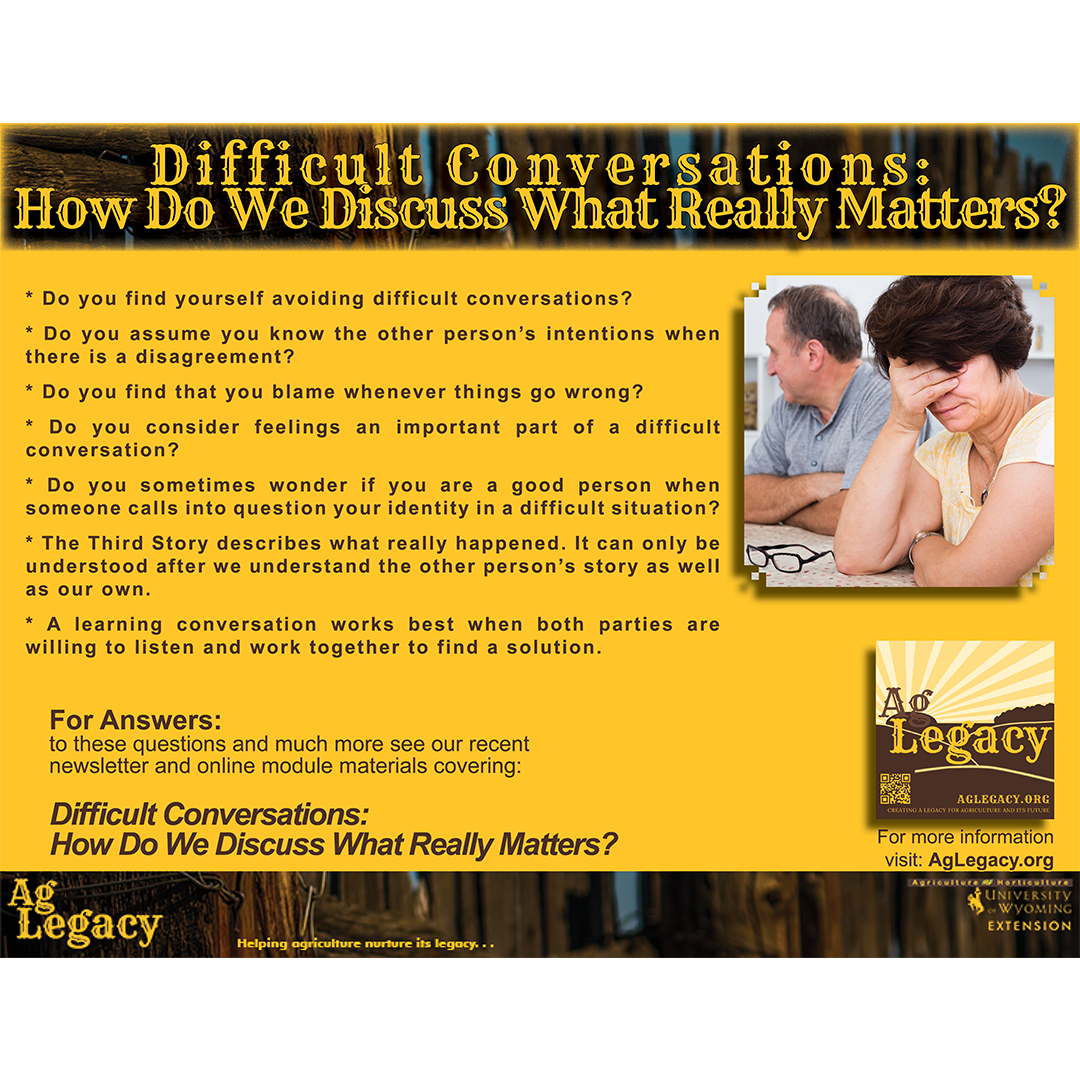
* Do you find yourself avoiding difficult conversations?
* Do you assume you know the other person’s intentions when there is a disagreement?
* Do you find that you blame whenever things go wrong?
* Do you consider feelings an important part of a difficult conversation?
* Do you sometimes wonder if you are a good person when someone calls into question your identity in a difficult situation?
* The Third Story describes what really happened. It can only be understood after we understand the other person’s story as well as our own.
* A learning conversation works best when both parties are willing to listen and work together to find a solution.

FOR ANSWERS:
to these questions and much more see our recent newsletter and online module covering: Difficult Conversations: How Do We Discuss What Really Matters? at: AGLEGACY.org > Modules