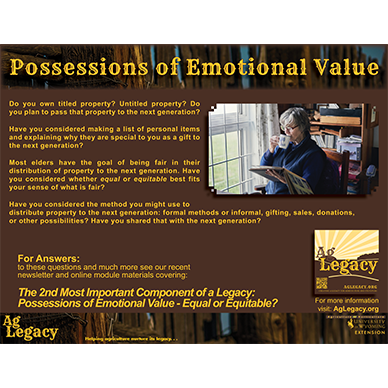
Possessions of Emotional Value

AgLegacy_IMAGE

* Do you own titled property? Untitled property? Do you plan to pass that property to the next generation?
* Have you considered making a list of personal items and explaining why they are special to you as a gift to the next generation?
* Most elders have the goal of being fair in their distribution of property to the next generation. Have you considered whether equal or equitable best fits your sense of what is fair?
* Have you considered the method you might use to distribute property to the next generation: formal methods or informal, gifting, sales, donations, or other possibilities? Have you shared that with the next generation?

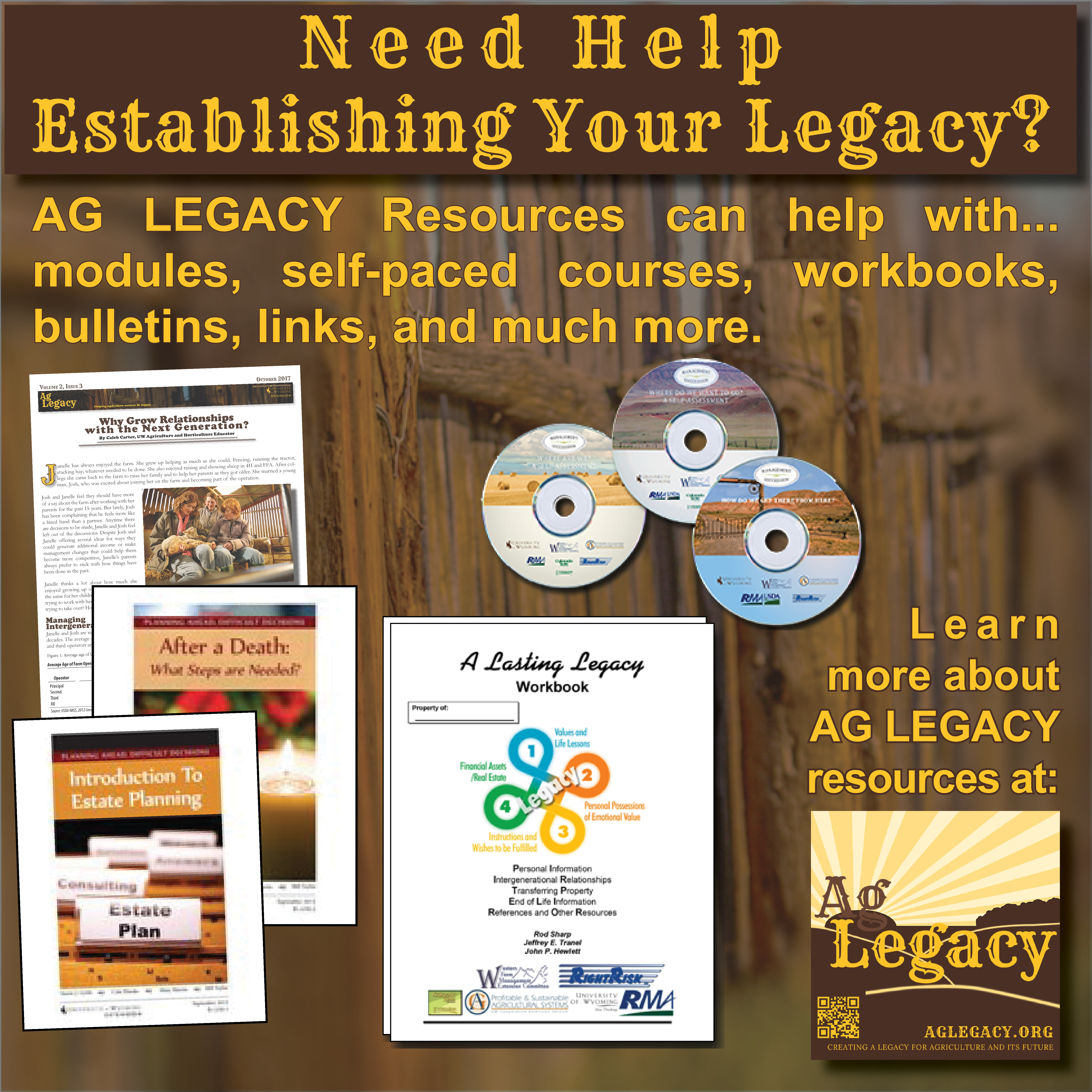
For Answers to these questions and much more see our recent newsletter and online module materials covering: the 2nd most important component of a legacy: Possessions of Emotional Value – Equal or Equitable?

#AGLEGACY.org #FarmSuccession #EstatePlanning
Distributing Possessions of Emotional Value: Equal or Equitable?

2019_04_AgLegacyNewsletter

Fairness is a hard concept for people of any age to understand. This is because it requires one to be able to see things from another person’s point of view. Equal: The context of equality means all persons are treated the same; This could mean equal number of items, dollar value, or emotional value. Equitable: An equitable distribution would take into account differences; These differences could be age, gender, needs, care giving role, and other distinctive differences.
   Families members are generally more excited to consider leaving a legacy, where they are often uncomfortable discussing topics such as inheritance. Legacy takes into account all aspects of what an individual or family will leave behind.

…to read more click here


Where Are We with Management Succession?

AgLegacy_IMAGE

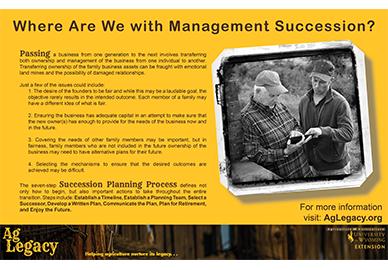
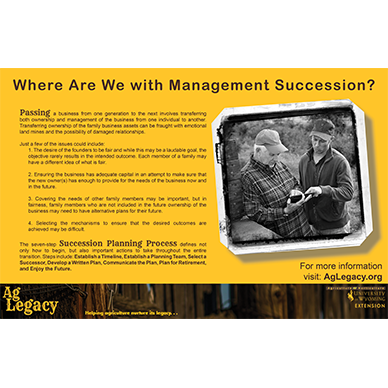
Passing a business from one generation to the next involves transferring both ownership and management of the business from one individual to another. Transferring ownership of the family business assets can be fraught with emotional land mines and the possibility of damaged relationships.

The seven-step Succession Planning Process defines not only how to begin, but also important actions to take throughout the entire transition. Steps include: Establish a Timeline, Establish a Planning Team, Select a Successor, Develop a Written Plan, Communicate the Plan, Plan for Retirement, and Enjoy the Future.

#AGLEGACY.org #FarmSuccession #EstatePlanning
Where Are We with Our Management Succession?

2019_02_AgLegacyNewsletter

Where Are We with
Our Management Succession?

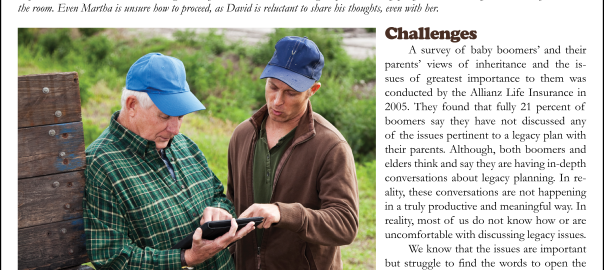
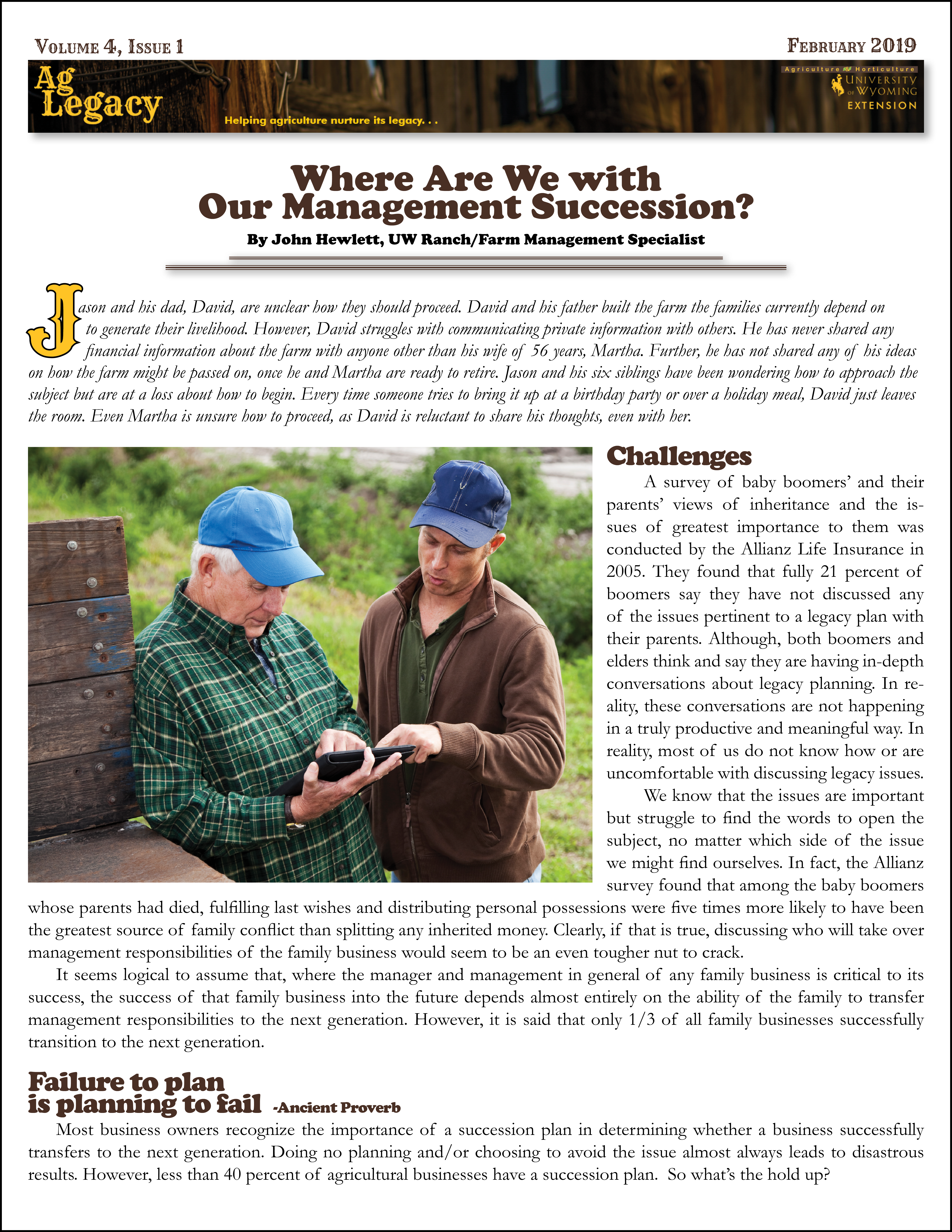
It seems logical to assume that, where the manager and management in general of any family business is critical to its success, the success of that family business into the future depends almost entirely on the ability of the family to transfer management responsibilities to the next generation. However, it is said that only 1/3 of all family businesses successfully transition to the next generation.

…to read more click here

Are You Mentoring the Next Generation?

AgLegacy_IMAGE

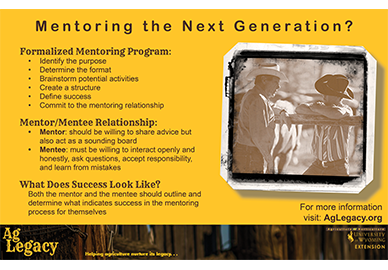
Formalized Mentoring Program:
* Identify the purpose
* Determine the format
* Brainstorm potential activities
* Create a structure
* Define success
* Commit to the mentoring relationship

Mentor/Mentee Relationship:
Mentor: should be willing to share advice but also act as a sounding board
Mentee: must be willing to interact openly and honestly, ask questions, accept responsibility, and learn from mistakes

What Does Success Look Like?
Both the mentor and the mentee should outline and determine what indicates success in the mentoring process for themselves

#AGLEGACY.org #FarmSuccession #EstatePlanning